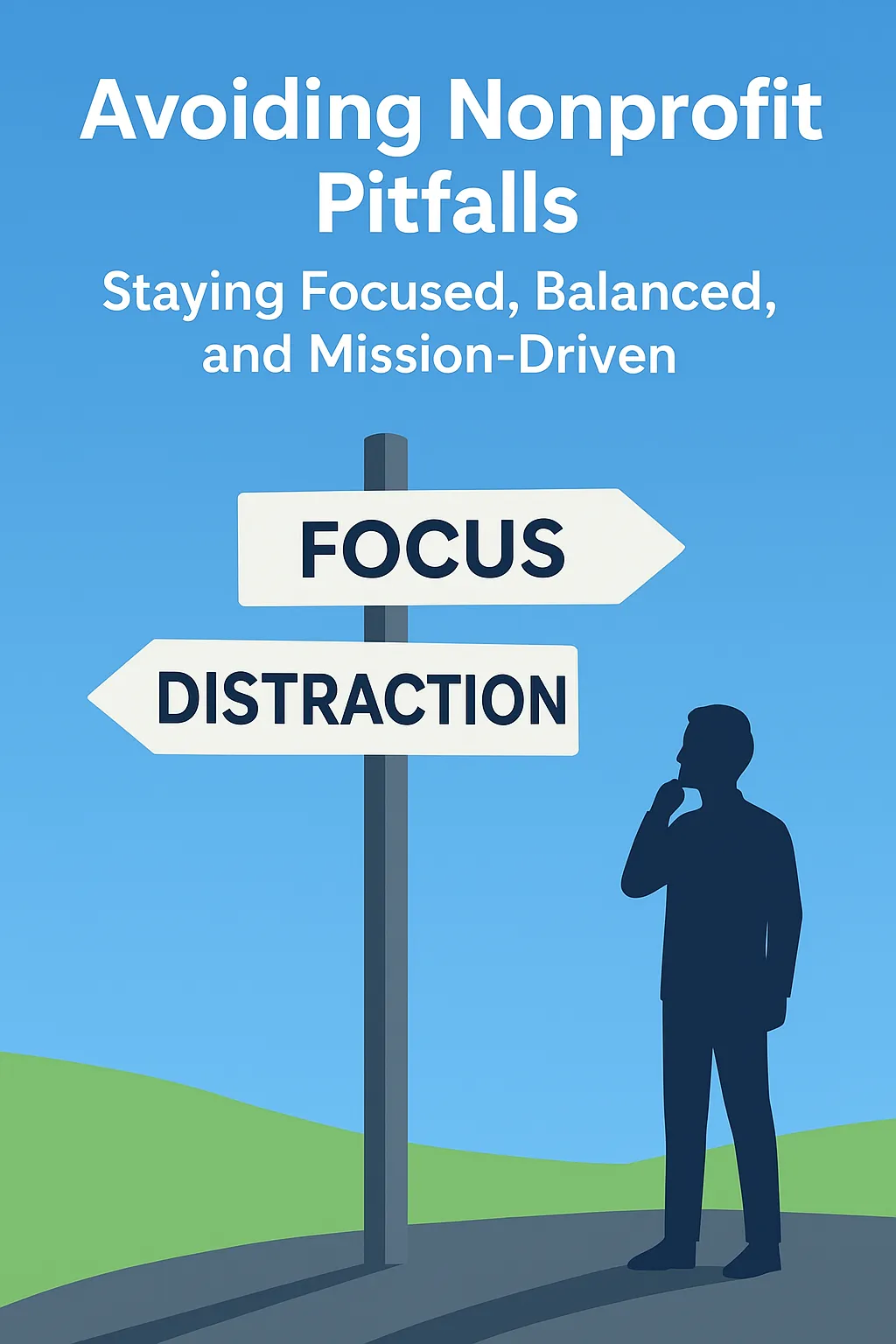
When Nonprofit Buzzwords Become Warning Signs
If you’ve spent any time in the nonprofit world, you’ve probably heard a few terms tossed around that sound harmless – until you realize they describe problems that can quietly derail your organization. Words like burnout, mission creep, and founder syndrome often pop up in board meetings or nonprofit circles as cautionary tales.
The good news? Every one of these can be avoided with a little awareness and a lot of intentionality. Here are some of the most common nonprofit pitfalls and how to keep your organization from falling into them.
Founder Syndrome
This happens when the founder struggles to let go of control or make room for others to lead. It’s easy to fall into because the nonprofit is the founder’s baby – they built it from scratch, and they know it best. But when every decision flows through one person, growth slows and morale dips.
How to avoid it:
Founders need to understand from the start that the board – not the founder alone – runs the nonprofit organization. The board makes decisions collectively, not individually.
Build a strong, empowered board and truly listen to their perspectives. Invite differing opinions and trust the people you’ve brought on board. You’ll not only protect the organization, but also yourself from burnout and resentment.
Executive or Founder Burnout
Passion fuels most nonprofit founders, but without boundaries, that fire can burn you out. When you’re answering emails at midnight, managing events, and trying to fix the printer, it’s only a matter of time before exhaustion sets in.
How to avoid it:
Delegate. Take breaks. Build a team of capable people who can share the load. Remember, rest isn’t laziness – it’s leadership maintenance. A tired founder can’t lead a thriving organization.
Mission Creep
Mission creep occurs when your nonprofit keeps expanding into new areas that don’t tightly align with its original mission. It often starts with good intentions (“Someone asked if we could just add this one small program…”), but before long, your focus – and your funding – becomes scattered.
How to avoid it:
Use your mission statement as your North Star. Make sure it’s clearly aligned with your original intent and stick to it. Every time a new opportunity arises, ask: Does this advance our mission or distract from it? It’s okay to say no when something doesn’t fit. Clarity creates credibility.
Your mission statement can evolve as your organization grows. Just be sure to wordsmith it carefully so it continues to guide you well into the future.
Board Inertia
We’ve all seen it: a well-meaning board that shows up for meetings but rarely takes action between them. The result is frustration for everyone and a lot of unrealized potential.
How to avoid it:
Set clear expectations from the start. Be specific about what active participation looks like – whether it’s attending events, joining committees, or helping fundraise. Recognize and thank those who contribute meaningfully. Energy follows encouragement.
The board chair should start each meeting with a “Mission Moment” to remind members why they give their time, treasure, and talent. They could read a thank-you note from someone the organization helped, share a client’s success story, or show a short video clip of one of the programs in action.
Scope Creep (in Projects)
You start with a simple project plan, and somehow it grows three heads and starts breathing fire. Scope creep drains resources and focus, leaving everyone exhausted.
How to avoid it:
Define project goals clearly and revisit them often. If new ideas emerge, evaluate whether they fit within your capacity and timeline before saying yes.
Donor Fatigue
If you reach out to donors only when you need money, eventually they’ll tune out your communications. Donor fatigue happens when people feel over-asked and underappreciated.
How to avoid it:
Keep donors connected year-round with updates, stories of impact, and genuine gratitude. When they see how their support makes a difference, giving becomes a joy, not a chore.
You might set up a “Thankful Thursday,” when employees or volunteers call donors just to thank them for their past support – with no type of ask. If you speak with them directly, thank them, then ask why they chose to support your organization and what they like best about it. This helps them reconnect with why they give. Offer a short update on how their funds are being used and the good work being done. These quick calls keep your organization front of mind and build lasting relationships.
Strategic Drift
Even organizations with solid plans can slowly drift off course when short-term distractions outweigh long-term goals. Strategic drift is sneaky because it often happens quietly, one small compromise at a time.
How to avoid it:
Treat your strategic plan like a living guide, not a binder collecting dust. Review it at least once a year with your board, celebrate progress, and adjust where needed. Every few years, your board should hold a retreat to discuss your long-range (perhaps five-year) strategic plan.
Analysis Paralysis
Data is great until it becomes an excuse not to act. Some nonprofits get stuck waiting for the perfect time, perfect plan, or perfect information before moving forward.
How to avoid it:
Gather what you need, then take the next right step. Progress beats perfection every time.
Running a nonprofit comes with its own language, but understanding these terms helps you spot trouble before it starts. Every challenge is manageable when you stay grounded in your mission, empower your people, and lead with intention.
Until next time, keep leading with passion and purpose. 💌
Have a question or want to share your thoughts? Email me at [email protected] – I’d love to hear from you.