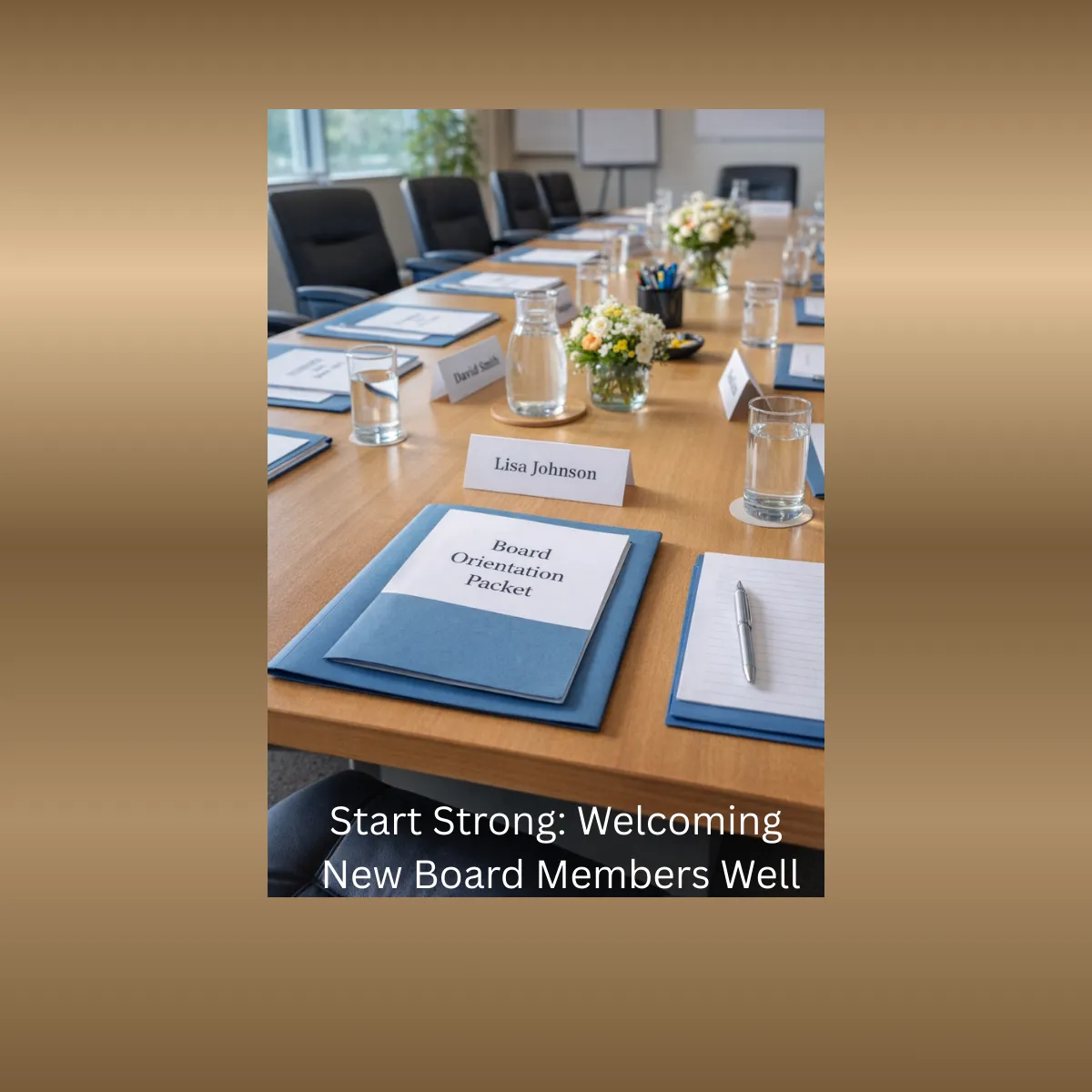
What Every Nonprofit Should Include in a Board Orientation Packet
Welcome to Passion. Planning. Progress., where I share stories, strategies, and insights to help nonprofit founders turn their vision into lasting impact.
A nonprofit can recruit talented, enthusiastic board members, but if those new members arrive at their first meeting unsure of how the organization works, what their role is, or even who everyone is, some of that enthusiasm can quickly turn into hesitation.
That’s why a strong board orientation packet matters.
A thoughtful orientation packet helps new board members feel informed, welcomed, and prepared to contribute sooner. It also sends an important message: We value your time, and we want to set you up for success.
At the same time, handing someone a thick folder of documents without explanation can feel overwhelming. The goal is not simply to transfer information. It’s to help new members understand how all the pieces fit together and where they fit within them.
Start With a Warm Welcome
Before the bylaws, policies, and financial statements, begin with something personal: a short welcome letter from the board chair and/or executive director.
That letter should:
Thank them for saying yes to serving
Remind them why the organization’s mission matters
Share a recent success story or impact highlight
Reinforce that their skills and perspective are valued
This helps new members connect emotionally before they begin sorting through organizational details.
A board packet should feel less like paperwork and more like an invitation to join in meaningful work.
Include the Core Identity of the Organization
New board members need a clear understanding of what the organization is and what guides its decisions.
That means including:
Mission statement
Vision statement
Core values
Brief history of the organization
The history does not need to be lengthy, but it should explain how and when the nonprofit began, what problem it was created to address, and how it has evolved.
Understanding where an organization has been helps board members better understand where it is headed.
Provide Governance Documents
Board members are responsible for governance, so they should receive the documents that explain how the organization operates legally and structurally.
These should include:
Bylaws
Policies and Procedures – may include:
o Conflict of Interest
o Confidentiality
o Non-disclosure
o Whistleblower
o Document Retention & Destruction
o Code of Conduct
o Gift Acceptance
o Travel & Reimbursement
o Nondiscrimination
o Gender (if you serve only one gender, define who that includes)
o Volunteer
o Nepotism
Organizational Chart
Recent board meeting minutes
A conflict-of-interest form or disclosure policy is especially important, since many new board members may not realize that this is a normal part of nonprofit governance.
Make Expectations Crystal Clear
One of the most helpful things you can provide is a simple, direct board member expectations sheet.
This should outline:
Meeting attendance expectations
Event participation expectations
Committee involvement
“Give and/or get” financial expectations, if applicable
Board role descriptions
Term length and renewal process
Level of preparedness expected for board meetings (should they plan to come to meetings already having read committee reports and financials?)
Suggestion to mostly listen at their first board meeting but ask questions (and even challenge the status quo) after that first meeting – they were brought “on board” because they have something to offer
Many misunderstandings happen not because people are unwilling to help, but because no one clearly explained what helping looks like.
Clarity helps everyone succeed.
Help Them Understand the People Around the Table
A board works best when members quickly learn who brings what strengths to the organization.
Include:
Board roster with contact information
Staff roster with contact information
Short descriptions of each person’s professional role, experience, or community connections
This helps new members understand who may be a resource in different areas (and where they may have things or people in common), which can make introductions feel less intimidating.
Share the Financial Picture
Even board members who are not financially-minded need to understand the organization’s current financial reality.
Include:
Current financial statements
Approved annual budget
Recent fundraising highlights
Any major financial priorities or concerns
This does not mean they need to become accountants overnight. It simply helps them begin board service with an honest picture of the organization’s financial health.
Include Strategic Direction
New board members should know what the organization is actively trying to accomplish beyond day-to-day operations.
If you have one, include:
Current strategic plan
Major goals for the year
Key initiatives underway
This gives context for decisions they will hear discussed at meetings.
Make It Easy to Plug In
Many new board members are eager to help but do not know where they are needed most.
Include:
List of committees
Committee chairs
Brief description of what each committee handles
This allows members to quickly identify where their expertise may be useful.
Provide Practical Calendar Information
A very simple but often overlooked addition:
Fiscal year calendar (what happens when for the organization)
Dates of upcoming board meetings
Major events
Fundraising deadlines
Important annual milestones
People are more likely to stay engaged when they can see the rhythm of the organization early.
Explain the Language
Every nonprofit develops shorthand that longtime members understand automatically.
To a new board member, acronyms and industry language can be confusing.
A short glossary of:
common acronyms
internal terminology
sector-specific language
can prevent unnecessary confusion.
Pair the Packet With a Real Conversation
Even the best orientation packet should never replace human connection.
Sitting down with a new board member before their first meeting to walk through the materials can make all the difference.
That person—often the board chair, executive director, governance chair, or another experienced board member—should:
explain what matters most right now
answer questions openly
reassure them that no question is foolish
provide their direct contact information for questions that may arise later
Every new board member should leave that conversation feeling they have at least one trusted ally they can reach out to if they need help.
That kind of welcome often determines how quickly someone becomes an active contributor.
Orientation Is the Beginning of Retention
A thoughtful orientation packet does more than inform. It helps retain strong board members.
When people feel welcomed, prepared, and connected early, they are far more likely to engage deeply and stay committed.
Strong boards are not built only through recruitment. They are built through intentional beginnings.
Until next time, keep leading with passion and purpose. 💌 Have a question or want to share your thoughts? Email me at [email protected]. I’d love to hear from you.