What Hiring Managers Actually Look for in the First 10 Seconds
Most people believe their resume will be carefully read from top to bottom. It won’t be. At least, not at first.
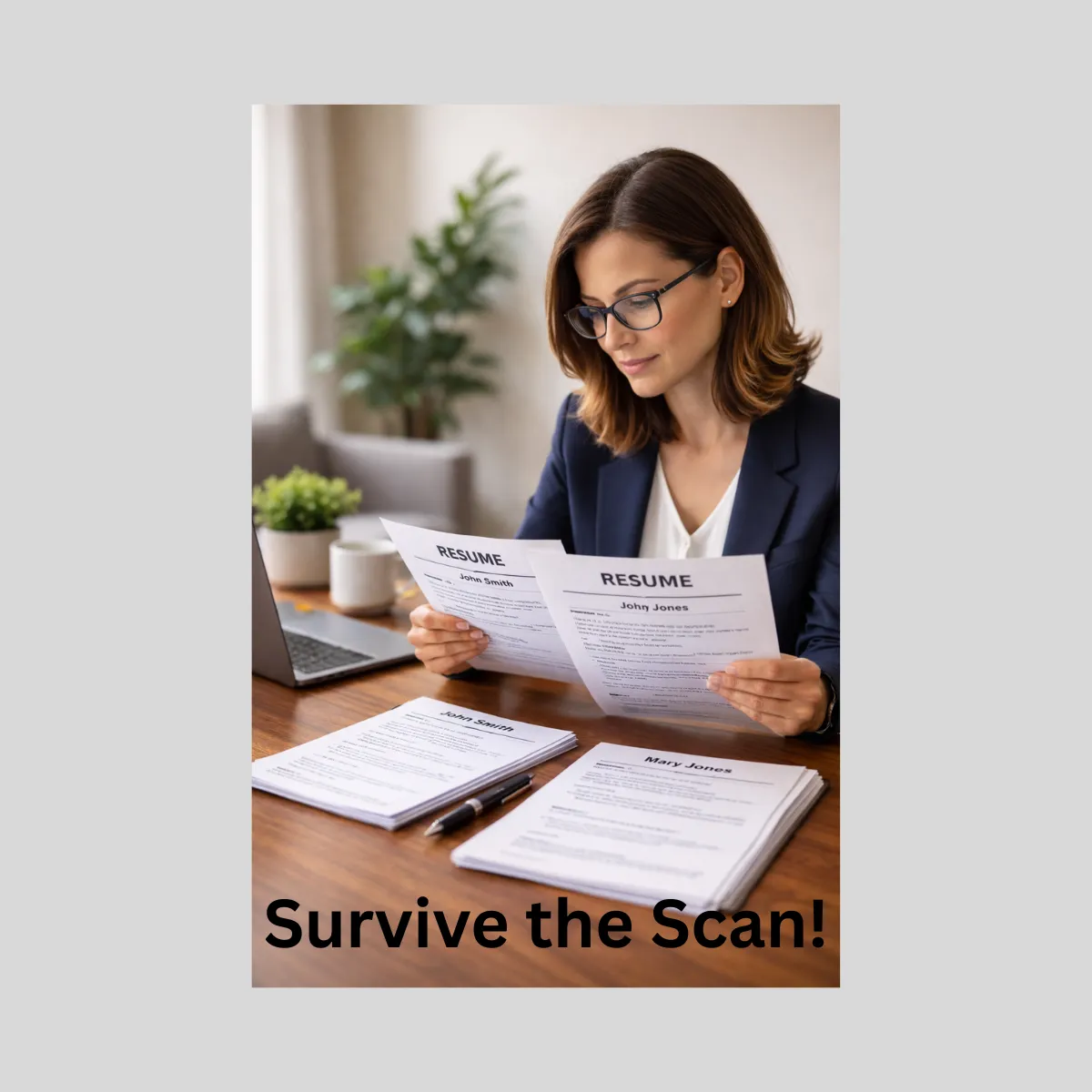
In reality, hiring managers often scan resumes before deciding whether they are worth a closer look. And that first scan may be only a few seconds.
That means your resume is not just about what you say in it. It’s about how quickly someone can see it.
So, what are hiring managers actually looking for in those first 10 seconds?
A Clear, Understandable Role
The first thing most people look for is simple:
What does this person do (and what can they do for our company)?
If your resume makes that hard to answer, you’ve already created friction.
Your job titles should be easy to find and easy to understand. If your actual title was vague or internal, consider clarifying it in a way that reflects your responsibilities.
A hiring manager should not have to decipher your career.
A Quick Sense of Level and Progression
Within seconds, someone is also trying to understand your level of experience.
They may glance at:
your most recent role
previous roles
how your responsibilities have grown over time
Are you moving forward? Taking on more responsibility? Expanding your scope?
Clear formatting and visible dates help tell that story quickly.
Evidence of Impact
This is where many resumes fall short.
Listing responsibilities is not enough. Hiring managers are scanning for signs that you made a difference (and, therefore, could make a difference for them).
They are looking for:
results
improvements
growth
leadership
And the easiest way to show that?
Numbers.
Increased revenue by 22%
Managed a team of 10
Reduced processing time by 30%
Impact stands out. General descriptions do not. In order for the numbers to stand out to first glances, be sure to use numerals rather than spelling out the numbers.
Easy-to-Scan Formatting*
Even strong experience can be overlooked if the layout is difficult to read.
During a quick scan, hiring managers are drawn to:
bolded job titles (bold them and list them before the employer)
bullet points (not paragraphs)
consistent spacing
clean alignment
visible dates
Dense blocks of text slow people down, and when something feels slow, it often gets skipped.
A well-formatted resume invites the reader in.
* If you’re realizing your resume may be working against you, I shared more detailed guidance in last week’s post on how to strengthen your resume and make your experience easier to see.
Relevant Experience (Not Everything You’ve Ever Done)
Another thing that happens quickly in that first scan:
Hiring managers are subconsciously asking:
“Does this person’s experience match what we need?”
If your most relevant experience is buried or diluted by less relevant roles, it may not get noticed.
That doesn’t mean removing everything. It means prioritizing what matters most for the role you want now.
Red Flags (Yes, They Notice These Too)
Even in a quick scan, certain things stand out for the wrong reasons:
inconsistent formatting
typos or grammar mistakes
unclear dates or gaps that raise questions
overly long paragraphs
resumes that feel cluttered or rushed
None of these automatically disqualify you – but they can make someone pause. And in a competitive pool, pauses matter. If your resume shouts that you do not pay attention to detail, that is what the hiring manager may infer.
The Goal Isn’t to Tell Everything
One of the biggest mindset shifts:
Your resume does not need to tell your entire story. It needs to do one thing well: Make someone want to keep reading and digging deeper.
Clarity beats completeness.
Readability beats crowded.
Focused information beats overwhelming overload.
A Simple Test
After you finish your resume, try this:
Look at it for 10 seconds.
Then ask yourself:
Can I quickly tell what I do?
Is my level of experience clear?
Do my accomplishments stand out?
Is it easy to scan?
If the answer to any of those is no, that’s where to improve.
Final Thought
You may have years of valuable experience, but if it’s not immediately visible, it can be missed.
A strong resume doesn’t just document your career.
It highlights it.
Until next time, keep leading with passion and purpose. 💌 Have a question or want to share your thoughts? Email me at [email protected]. I’d love to hear from you.
👉 Missed last week’s post? Here’s how to make your resume easier to scan: https://501guide.com/post/new-blog-post-6903
Earlier blog posts available at https://501guide.com/blogpage